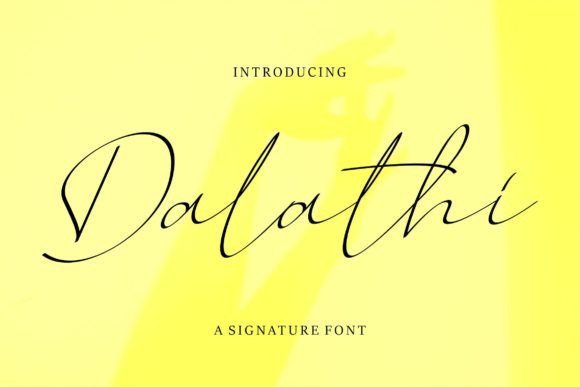
Dalathi: A Signature Script Font for Elegant Branding
I remember the exact moment I realized Dalathi was the missing piece of a stubborn identity project. It was 11 PM, and I was staring at a blank brand board for a boutique skincare line that felt too clinical. I had tried sleek sans serifs for minimalism and rigid serifs for tradition, but neither captured the organic, handcrafted soul of the product. On a whim, I dragged Dalathi onto the canvas. Suddenly, the layout breathed. The signature script font with a calligraphy style didn’t just sit on the page; it flowed, creating an immediate sense of luxury and personal touch that the other Fonts simply couldn’t achieve.
This isn’t just about picking a pretty typeface. As a brand designer, my job is to ensure every visual element serves the business goal. When I tested Dalathi across various mediums—from logo drafts to packaging mockups—it revealed its true potential as a versatile tool in modern typography. Below is my honest review of how this Script Handwritten typeface performs in real-world design scenarios, along with practical advice on where it shines and where you might want to tread carefully.
Dalathi for Wedding Invitations and Greeting Cards
If you are designing high-end stationery, Dalathi is arguably one of the strongest assets in your toolkit. The primary strength of this Script Handwritten font lies in its fluidity and elegance, making it exceptionally suited for invitations like greeting cards. Unlike stiff, formal calligraphy fonts that can feel cold or outdated, Dalathi retains a human, handwritten warmth that resonates deeply with recipients.
In my experience working on wedding suites, readability is often the enemy of beauty. However, Dalathi strikes a rare balance. The letterforms are distinct enough to be legible even at smaller sizes, yet elegant enough to convey sophistication. When paired with ample white space and subtle textures, such as gold foil stamping or embossed paper, Dalathi elevates the perceived value of the invitation instantly. It works beautifully for couple names, date lines, and RSVP details, serving as the focal point of the design hierarchy. For designers looking to add a personal, artisanal feel to their stationery projects, this font delivers immediate emotional impact.
Dalathi in Branding Materials and Business Cards
Building a cohesive brand identity requires more than just a logo; it demands consistency across all touchpoints. This is where Dalathi proves its worth as a premium script font for branding materials. During a recent rebrand for a local artisanal bakery, I used Dalathi for the logo lockup and extended it to business cards, packaging labels, and social media headers.
The font’s calligraphic nature lends itself well to luxury positioning. On a minimalist business card, a single line of text in Dalathi can communicate exclusivity and craftsmanship without shouting. It pairs exceptionally well with clean, modern sans serif fonts for secondary information like contact details or addresses. This contrast—between the organic flow of Dalathi and the structured stability of a sans serif—creates a dynamic visual tension that keeps the eye moving. For entrepreneurs and small business owners in creative industries, using Dalathi helps establish a brand voice that feels both professional and approachable.
Dalathi for Posters, Quotes, and Social Media Graphics
In the digital age, attention spans are short, and visual appeal is paramount. Dalathi excels in environments where you need to capture interest quickly, such as posters, quotes, and social media graphics. Its display capabilities make it ideal for headline use, where large sizing allows the intricate details of the script to shine.
When creating content for platforms like Instagram or Pinterest, Dalathi stands out against busy backgrounds or solid color blocks. I often use it for inspirational quotes or promotional announcements because the script style adds a layer of artistry that standard fonts lack. However, there is a strategic limitation here: Dalathi is best used as a display font rather than body text. In social media layouts, keep the text concise. Let the font do the heavy lifting by highlighting key words or phrases. For example, using Dalathi for the main hook of a quote while keeping the attribution in a neutral, lightweight sans serif ensures that the message is both aesthetically pleasing and easily digestible.
Design Limitations and Best Practices
No typeface is perfect, and understanding the limitations of Dalathi is crucial for responsible design. While it is stunning for accents and headlines, it is not suitable for long-form body text. The varying stroke weights and connected letterforms can reduce readability when set in paragraphs, leading to eye strain for the reader. Additionally, due to its decorative nature, Dalathi may not be appropriate for formal corporate communications, technical manuals, or legal documents where clarity and neutrality are prioritized over style.
Another critical consideration is scalability. When testing Dalathi on a shop sign or a mobile website header, always check how it renders at different resolutions. Thin strokes in script fonts can sometimes disappear or break up if scaled down too far or printed on low-quality substrates. I recommend always exporting proofs at actual size before finalizing client work. Furthermore, ensure you are reviewing the included styles, alternates, and ligatures. Many modern script fonts offer swashes that can enhance specific words, but they must be applied judiciously to avoid clutter.
Font Pairing and Commercial Licensing
To maximize the effectiveness of Dalathi, thoughtful font pairing is essential. Since Dalathi is a Signature script font with a calligraphy style, it pairs naturally with understated typefaces that provide structural support. A geometric sans serif or a classic serif font creates a harmonious contrast that balances the organic curves of Dalathi. Avoid pairing it with another script font, as this can create visual chaos and compete for attention.
Finally, before deploying Dalathi in any commercial capacity, it is imperative to review the licensing agreement. Whether you are using the font for a client’s brand identity, packaging design, web design, or print-on-demand products, you must ensure you have the appropriate commercial license. Using fonts without proper permission can lead to legal issues and damage your professional reputation. By treating Dalathi as a valuable asset within your design system and respecting its intended use cases, you can create compelling, professional designs that resonate with your audience.